Tristan Meaning in the Bible: Christian Symbolism & Faith
Every name carries a story. Some names come straight from Scripture, while others reach us through centuries of cultural and spiritual tradition. Tristan belongs to the second group — a name rooted in Celtic history, shaped by medieval Christian Europe, and layered with meaning that speaks powerfully to the heart of biblical faith.
If you’re wondering what Tristan means in a biblical context, whether it qualifies as a Christian name, or how its symbolism connects to Scripture, this guide covers everything you need to know. From its linguistic origins to its spiritual depth, the name Tristan holds more significance for believers than most people realize.
Is Tristan a Biblical Name?
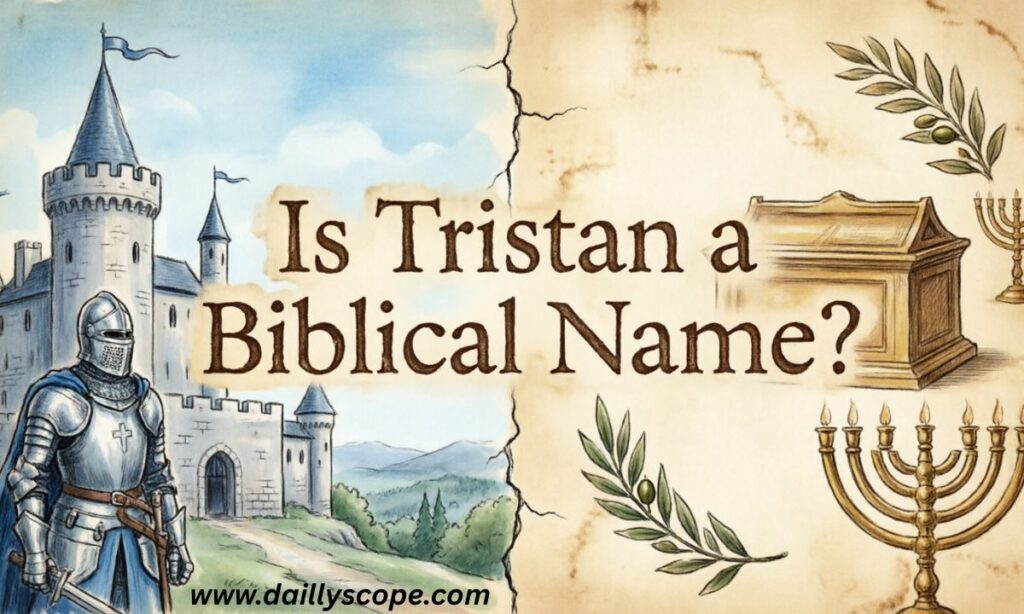
The direct answer is no — Tristan does not appear anywhere in the Bible. No prophet, king, priest, or disciple in either the Old or New Testament carries this name. Tristan did not emerge from Hebrew, Aramaic, or Greek — the primary languages of Scripture — but instead from Celtic and Old French linguistic traditions, centuries after the biblical canon was completed.
However, this fact alone does not disqualify it from Christian use or spiritual significance. Consider names like Christopher, Stephanie, or Madison — none of these appear in the Bible, yet millions of devout Christians carry them with pride. What ultimately matters is whether a name’s meaning and themes align with the truth of God’s Word, and in Tristan’s case, they absolutely do.
Tristan in Biblical History and Tradition
While Tristan is absent from biblical pages, its presence within Christian history is well-documented. Early Christian monasteries across medieval Europe recorded monks and priests bearing the name. As the faith spread through Celtic regions — Wales, Cornwall, Brittany, and Ireland — names from these cultures were absorbed into the growing Christian tradition.
The legend of Tristan and Isolde, the famous medieval romance, was told and retold throughout explicitly Christian Europe. Though the story itself contains themes of tragic love, it embedded the name Tristan firmly within Western Christian culture and literature. By the Middle Ages, the name had crossed from pagan Celtic mythology into mainstream Christian naming practice.
This trajectory mirrors many beloved names in Christian history. Names often begin in one cultural world and are transformed by their encounter with the gospel, carrying new spiritual weight into every generation that embraces them.
Tristan in Celtic and Christian Culture
To understand the spiritual meaning of Tristan, it helps to trace its roots carefully. Scholars point to two primary origins:
| Origin | Root Word | Core Meaning |
| Latin | tristis | Sorrowful, sad |
| Celtic (Pictish) | Drustan / Drust | Tumult, noise, bold warrior |
The most widely accepted etymology links the name to the Latin tristis, meaning “sorrowful.” The Old French form Tristan grew from this root, giving the name its melancholy undertone. But the Celtic layer — particularly the Pictish name Drustan, meaning “tumult” or “bold disruption of evil” — adds a warrior quality that balances the sadness with strength.
This dual nature is exactly what makes Tristan so resonant in a Christian context. The name is not simply about grief — it is about sorrow that produces strength. That is a thoroughly biblical idea.
In Celtic Christianity, which maintained a unique and deeply devotional flavor while holding firmly to orthodox biblical truth, names from this tradition often carried dual meaning: earthly struggle paired with divine purpose. Tristan reflects both.
Christian Meaning of the Name Tristan
Read This: Sebastian Name: Origin, History and Spiritual Meaning
When viewed through the lens of Christian theology, the name Tristan carries a layered and meaningful message. Its core themes — sorrow, endurance, transformation, and faith — mirror the central narrative arc of the Christian life itself.
Here is how each layer of Tristan’s meaning connects to Christian truth:
- Sorrow — Scripture never pretends life is painless. The Psalms are filled with lament. Jesus wept (John 11:35). Biblical sorrow is not weakness; it is honest faith.
- Endurance — James 1:2-4 teaches that the testing of faith produces steadfastness. Tristan’s meaning of tumult speaks to the perseverance required to walk faithfully through difficulty.
- Transformation — Romans 12:2 calls believers to be transformed by the renewing of their minds. The name Tristan, understood spiritually, represents that journey from sorrow to strength.
- Hope — Perhaps the most important dimension. Sorrow in the biblical worldview is never the final word. “Weeping may endure for a night, but joy comes in the morning” (Psalm 30:5).
The name Tristan, therefore, tells a story that every Christian will recognize: a journey through trials, anchored in faith, moving always toward redemption.
Spiritual Symbolism of Tristan in Christianity
The spiritual symbolism embedded in the name Tristan is rich and multi-layered. Several key themes emerge when the name is examined through a Christian lens:
Sorrow as a Doorway to God
The Bible consistently shows that God meets His people in their lowest moments. “The Lord is close to the brokenhearted and saves those who are crushed in spirit” (Psalm 34:18). Tristan’s meaning of sorrow does not represent abandonment — it represents the very place where God often draws nearest.
Strength Through Suffering
Just as gold is purified through fire, Christian character is often formed through hardship. The Celtic warrior dimension of Tristan — bold, fierce, unbroken — aligns perfectly with the biblical portrait of men and women who endured trials and emerged stronger. Job, Jeremiah, Paul, and David all walked this road.
Redemptive Purpose in Pain
One of the most powerful promises in Scripture is found in Romans 8:28: “And we know that in all things God works for the good of those who love him.” The name Tristan symbolizes this truth — that God does not waste suffering. Every sorrow has a purpose in His hands.
Warrior Faith
The Celtic root meaning of Tristan — bold disruption, tumultuous courage — echoes Ephesians 6:10-11, where believers are called to put on the full armor of God and stand firm. Tristan, in this sense, is a name for spiritual warriors: those who face life’s trials head-on, trusting in God’s faithfulness.
Names Similar to Tristan in the Bible
Since Tristan does not appear in Scripture, many Christian families look for biblical names that share a similar spirit, sound, or meaning. Here are several worth considering:
| Biblical Name | Meaning | Connection to Tristan |
| Job | Persecuted, afflicted | Shared theme of sorrow transformed through faith |
| Jabez | Pain, sorrow | Name born from difficulty; prayer turned it into blessing (1 Chronicles 4:9-10) |
| Naomi | Pleasant (changed to “bitter” in grief) | Theme of sorrow and eventual redemption |
| David | Beloved | Warrior-poet who wrote deeply about suffering and hope |
| Gabriel | God is my strength | Popular with Tristan-leaning families; strong, lyrical, biblical |
| Gideon | Mighty warrior | Shares Tristan’s Celtic warrior dimension |
| Samuel | Heard by God | Faithful endurance; answered prayer |
If you love the sound and feel of Tristan but want a biblical alternative, Gabriel and Gideon come closest to capturing that blend of strength, nobility, and spiritual depth.
Biblical Values Connected to the Name Tristan
Even without a direct scriptural mention, the name Tristan is connected to several core biblical values that Christian families hold dear:
1. Perseverance in Faith Hebrews 12:1 calls believers to “run with endurance the race set before us.” Tristan embodies exactly this — forward motion through difficulty, never giving up.
2. Compassion Rooted in Shared Suffering Those who have walked through sorrow develop a particular tenderness toward others in pain. Scripture praises this empathy. The name Tristan may speak to a sensitive, deeply compassionate spirit.
3. Trust in God’s Sovereignty Isaiah 41:10 promises: “Do not fear, for I am with you; do not be dismayed, for I am your God.” Tristan, at its spiritual core, is a name that invites trust in God even when circumstances are painful.
4. Courage in Adversity Joshua 1:9 calls God’s people to “be strong and courageous.” The warrior spirit embedded in Tristan’s Celtic roots directly parallels this biblical command.
5. Redemptive Hope John 16:20 records Jesus telling His disciples: “Your grief will turn to joy.” This is the defining promise behind Tristan’s spiritual meaning — the assurance that sorrow does not have the last word.
Is Tristan a Good Christian Name?
Yes — Tristan is a perfectly good name for a Christian child, and here’s why:
- Spiritual alignment — Its core themes of sorrow, endurance, courage, and redemption are woven through the entire fabric of Scripture.
- Historical acceptance — The name has been carried by Christians across Europe for over a thousand years, including monks, priests, and countless faithful believers.
- Cultural depth — Parents who choose Tristan often value names that reflect a grounded, honest faith: one that doesn’t pretend life is painless, but trusts God in every season.
- No negative biblical associations — Unlike some names that carry problematic scriptural baggage, Tristan is free from any negative spiritual connotations.
- Character formation — The name encourages the bearer to view challenges as opportunities for spiritual growth, which is a thoroughly biblical perspective.
A name does not need to appear in the Bible to be a good Christian name. What matters far more is the faith lived by the person who carries it.
What Does Tristan Represent in Christian Faith?
In the broadest sense, Tristan represents the honest Christian journey: a life that acknowledges pain, endures through faith, and moves toward hope and redemption.
The name captures something that shallow spirituality often misses — the truth that God uses difficulty to shape His people. Like the great biblical figures who carried names tied to struggle (Jabez meant “pain,” Naomi called herself “bitter,” even Jesus was called “a man of sorrows” in Isaiah 53:3), Tristan stands in a long tradition of names that tell the truth about human experience while pointing toward divine grace.
For a Christian, bearing the name Tristan can be a daily reminder that:
- God is present in every season, especially the painful ones
- Sorrow is not the end of the story
- Strength is forged through trials, not despite them
- Faith that has been tested is faith that endures
Frequently Asked Questions
Does Tristan appear in the Bible?
No, the name Tristan is not found anywhere in the Old or New Testament.
What does Tristan mean spiritually?
Spiritually, Tristan represents sorrow that grows into strength, endurance through trials, and redemptive faith — all deeply biblical themes.
Is Tristan a Christian name?
Yes — while not biblical in origin, Tristan has been used by Christians across Europe for over a thousand years and carries values that align with Christian faith.
What is the origin of the name Tristan?
Tristan traces to the Latin word tristis (sorrowful) and the Celtic name Drustan (bold, tumultuous), popularized through medieval European literature.
What Bible verses connect to the meaning of Tristan?
Key verses include Psalm 30:5 (“weeping may endure for a night, but joy comes in the morning”), Romans 8:28, Psalm 34:18, and Isaiah 41:10.
Is Tristan a good name for a Christian baby boy?
Absolutely — it carries strong spiritual symbolism, historical Christian use, and themes of courage, endurance, and hope that make it a meaningful choice.
What biblical names are similar to Tristan?
Gabriel, Gideon, Samuel, and David share similar qualities of strength, loyalty, and spiritual depth.
Does Tristan have a Hebrew meaning?
No — Tristan has no Hebrew equivalent or translation, as it comes from Celtic and Latin, not Semitic, linguistic roots.
Final Thoughts
The name Tristan may not be written in the pages of Scripture, but its meaning speaks the language of the Bible fluently. Rooted in the Latin word for sorrow and the Celtic spirit of a bold warrior, Tristan tells a story that every believer will recognize: the journey through pain toward purpose, through trials toward triumph, and through grief toward the joy that God promises will come in the morning.
For Christian families considering this name, Tristan offers something rare — a name that is honest about the human experience while remaining anchored in hope. It does not pretend faith is without struggle. Instead, it affirms that God walks with us through every season of sorrow and uses every hardship for His good purposes.
In that way, Tristan is not just a beautiful name with a rich history. It is, for those who carry it with faith, a quiet daily testimony to the redemptive grace of God.

Welcome to daillyscope.com! James Carter is a passionate writer and digital content creator dedicated to sharing meaningful Bible verses, spiritual insights, and SEO-friendly content. His goal is to deliver simple, engaging, and reader-friendly articles that inspire and guide online readers every day.